


The atmosphere was different. For many who watched or was there the encounter between Governor Seyi Makinde and the protesters led by social media activist Martins Vincent Otse, popularly known as VeryDarkMan (VDM), on Tuesday in Ibadan, one thing stood out, this was not the usual political theatre where a governor receives angry citizens only, delivers prepared remarks, and moves on. It was a moment that appeared to reveal the weight of a difficult situation on the shoulders of a governor facing one of the biggest security challenges of his administration.
From the first moments of the encounter, observers noticed a very different side of Governor Makinde. The usually cool and visibly sharp governor appeared more restrained, reflective, and deeply concerned. His facial expression, body language, and tone suggested a leader who was not merely responding to criticism but was personally affected by the tragedy unfolding in Oriire Local Government Area.
Of course, only the governor himself knows the full extent of what he was feeling internally. However, public leaders often communicate beyond their words, through their presence, their reactions, and the manner in which they engage citizens during moments of crisis. And yesterday, many Nigerians saw a governor carrying the seriousness of the moment.
A Governor Who Did Not Stand Above the Protesters
One of the most striking moments was the setting of the engagement. Rather than receiving the protesters from a distance in a formal government environment, Governor Makindewelcomed them into his private residence in Ikolaba, Ibadan. The symbolism was significant.
Government spaces often create a barrier between leaders and citizens. There are protocols, security arrangements, designated areas, and a clear separation between the person in power and those demanding answers. However, yesterday’s meeting appeared different. By allowing the protesters into his personal space, Makinde created an atmosphere that looked less like an official confrontation and more like a conversation between concerned citizens and a leader facing a national outcry. It was a message: I am not hiding from this conversation.
He Walked Into Their Midst
Another moment that attracted attention was the governor’s decision to physically enter the midst of the protesters rather than address them from a distance. In Nigerian politics, security concerns often make leaders maintain physical separation from crowds. Many politicians prefer to speak from elevated platforms, behind barricades, or through representatives. However, Makinde stepped closer. He interacted directly with the protesters, acknowledging their frustration and allowing himself to be surrounded by citizens demanding answers. For many observers, this was a significant political gesture. It showed a willingness to engage with uncomfortable emotions rather than avoid them.
The Vulnerability in His Words
Perhaps the biggest difference yesterday was not just where Makinde received the protesters, but how he spoke. His speech did not carry the usual tone of a politician defending his record. Instead, it carried elements of vulnerability. Addressing the protesters, the governor acknowledged the seriousness of the situation and said the abduction had affected him personally. He explained that security operations sometimes require confidentiality but assured Nigerians that efforts were ongoing to rescue the victims.
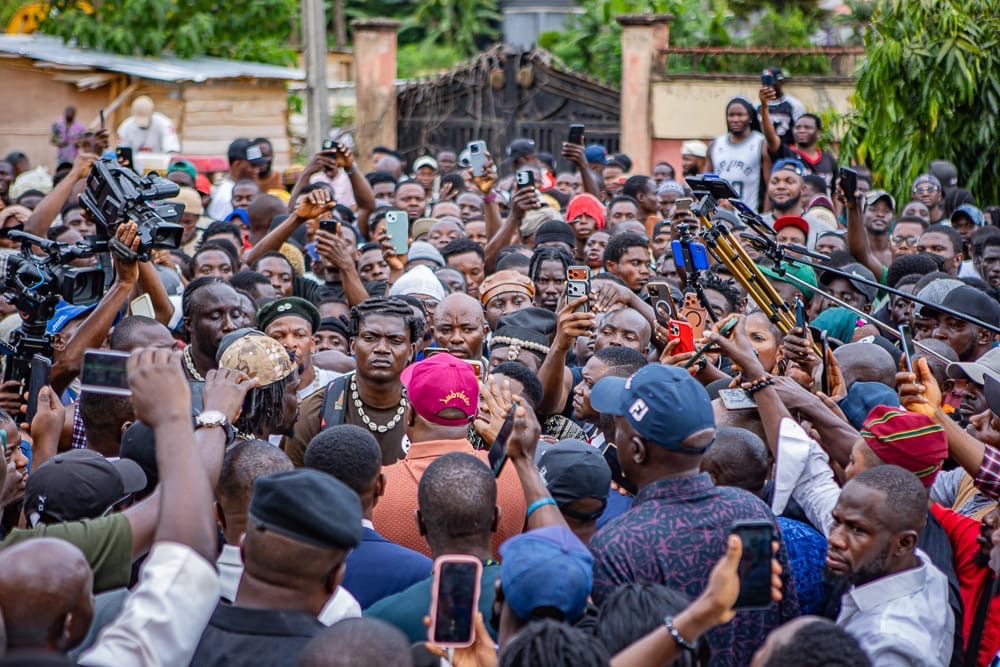
One of the strongest emotional moments came when he assured the protesters that Oyo State would not become another Chibokand that he was prepared to make sacrifices to ensure the safe return of the abducted pupils and teachers.That statement was significant because it moved the conversation away from politics and toward responsibility. It was the voice of a governor acknowledging that behind every security report are human beings, children, parents, families, and communities living with fear.
“If I Was Not In Government, I Would Have Joined You”
Another statement that attracted attention was when Makindesaid that if he was not occupying the office of governor, he would have participated in the protest himself. That statement was perhaps one of the strongest acknowledgements of the protesters’ concerns. Rather than dismissing the demonstration as opposition politics or an attempt to embarrass his administration, he recognised that citizens have a legitimate reason to demand answers. It was an admission that leadership sometimes requires listening even when the message is uncomfortable.
Acknowledging VDM and the Power of Citizen Pressure
The relationship between activists and government officials is often complicated.
Governments sometimes view protests as attacks, while citizens often see protests as the only language available when they feel ignored. However, yesterday’s encounter showed another possibility that activism and governance can meet in the same room. By receiving VDM and the protesters, Makindeacknowledged the role citizens play in holding leaders accountable. The protest was not just about one individual or one administration. It represented a wider fear among Nigerians about insecurity, the safety of schools, and the ability of governments to protect vulnerable citizens.
A Political Risk or a Leadership Moment?
Some critics may argue that meeting protesters in such a manner could be interpreted as a sign of weakness. Others may argue that it demonstrated confidence and emotional intelligence. However, leadership is often tested during uncomfortable moments.
The easiest thing for any leader to do is avoid criticism. The harder thing is to stand before angry citizens, listen to their pain, and respond without defensiveness. Yesterday’s encounter showed a different style of political engagement from what Nigerians are often used to. Whether it will translate into renewed public confidence depends on one thing, results.
At the end of the day, Nigerians will not only remember how the governor received the protesters. They will remember whether the abducted children and teachers returned safely, and whether lessons were learned to prevent such tragedies in the future. Because beyond the speeches, beyond the cameras, beyond the politics, there are families waiting for their loved ones to come home. And that remains the real measure of leadership.