

Prof. Shangodoyin Advocates Science And Innovation As Path To Nigeria’s Security Economic And Growth

Oyo State Commissioner for Energy and Mineral Resources, Prof. D. K. Shangodoyin, a professor of statistics, has called for the adoption of science, technology, and innovation as critical tools for addressing Nigeria’s growing human and resource insecurity. He made the call while delivering the keynote address at the 12th National Conference of the Faculty of Science, The Polytechnic, Ibadan, with the theme “The Challenges of Human and Resource Insecurity in Nigeria: The Role of Science and Technology.”

The Commissioner noted that despite Nigeria’s vast human capital and abundant natural resources, including over 44 commercially viable solid minerals, there is still a high rate of poverty, unemployment, food insecurity, illegal mining, crude oil theft, and environmental degradation, which has contributed to the low impact of the solid mineral sector on national GDP.

He stressed that human security extends beyond military concerns to include economic stability, food security, healthcare, education, environmental sustainability, and political stability, adding that evidence-based policies supported by scientific research and reliable data are essential to addressing these challenges.

Also Read:  ARESA-CASE: Sabotage From Within Emiolu Ruling House During Final Court Proceedings

The commissioner highlighted that the global transition to clean energy presents Nigeria with enormous opportunities, particularly through its deposits of critical minerals such as lithium, cobalt, graphite, and rare earth elements. He further noted that the country must strengthen governance, encourage value addition, and attract responsible investments to maximize these opportunities.

Also Read:  Oyo Speaker Mourns Former Lawmaker, Omo Sheu

While advocating for the deployment of artificial intelligence (AI), geographic information systems (GIS), drones, remote sensing, and satellite technology to improve mineral exploration, monitor illegal mining activities, protect critical infrastructure, and enhance evidence-based decision-making. The commissioner called on universities, polytechnics, and research institutes to strengthen collaboration with government and industry to ensure that research outputs are transformed into practical innovations capable of driving national development.
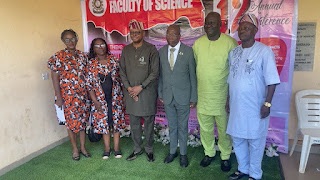
“As a professor of statistics, I strongly believe that reliable data and statistical analysis remain the foundation of effective governance. Governments must leverage big data analytics to anticipate risks, allocate resources efficiently, and evaluate policy outcomes,” he said.

Highlighting the Oyo State Government’s efforts, Shangodoyin said the administration of Governor Seyi Makinde has continued to implement reforms in the energy and mineral resources sector through improved planning, digital governance, investment promotion, and the adoption of geospatial technologies for sustainable resource management.

Also Read:  Governor Makinde flags off N1 Billion MSME fund for Small Businesses in Oyo State

Prof. Shangodyin closed his address by recommending increased investment in research and innovation, strengthened STEM education, improved governance in the extractive sector, renewable energy development, climate resilience, stronger partnerships among government, academia, and industry, and the institutionalization of evidence-based policymaking. He stressed that the nation’s future prosperity depends on embracing science, technology, innovation, and collaborative governance to transform insecurity into lasting economic growth.

LEAVE A REPLY

Please enter your comment!
Please enter your name here

Related Articles

Don't Miss

Categories

Prof. Shangodoyin Advocates Science And Innovation As Path To Nigeria’s Security Economic And Growth

Oyo State Commissioner for Energy and Mineral Resources, Prof. D. K. Shangodoyin, a professor of statistics, has called for the adoption of science, technology, and innovation as critical tools for addressing Nigeria’s growing human and resource insecurity. He made the call while delivering the keynote address at the 12th National Conference of the Faculty of Science, The Polytechnic, Ibadan, with the theme “The Challenges of Human and Resource Insecurity in Nigeria: The Role of Science and Technology.”

The Commissioner noted that despite Nigeria’s vast human capital and abundant natural resources, including over 44 commercially viable solid minerals, there is still a high rate of poverty, unemployment, food insecurity, illegal mining, crude oil theft, and environmental degradation, which has contributed to the low impact of the solid mineral sector on national GDP.

He stressed that human security extends beyond military concerns to include economic stability, food security, healthcare, education, environmental sustainability, and political stability, adding that evidence-based policies supported by scientific research and reliable data are essential to addressing these challenges.

Also Read:  Oyo Speaker Mourns Former Lawmaker, Omo Sheu

The commissioner highlighted that the global transition to clean energy presents Nigeria with enormous opportunities, particularly through its deposits of critical minerals such as lithium, cobalt, graphite, and rare earth elements. He further noted that the country must strengthen governance, encourage value addition, and attract responsible investments to maximize these opportunities.

Also Read:  Mother, Daughter Arrested for Allegedly Killing 25-Year-Old Man in Iseyin

While advocating for the deployment of artificial intelligence (AI), geographic information systems (GIS), drones, remote sensing, and satellite technology to improve mineral exploration, monitor illegal mining activities, protect critical infrastructure, and enhance evidence-based decision-making. The commissioner called on universities, polytechnics, and research institutes to strengthen collaboration with government and industry to ensure that research outputs are transformed into practical innovations capable of driving national development.

“As a professor of statistics, I strongly believe that reliable data and statistical analysis remain the foundation of effective governance. Governments must leverage big data analytics to anticipate risks, allocate resources efficiently, and evaluate policy outcomes,” he said.

Highlighting the Oyo State Government’s efforts, Shangodoyin said the administration of Governor Seyi Makinde has continued to implement reforms in the energy and mineral resources sector through improved planning, digital governance, investment promotion, and the adoption of geospatial technologies for sustainable resource management.

Also Read:  Osinbajo Commends Makinde, Calls For Peace Among Warring Parties

Prof. Shangodyin closed his address by recommending increased investment in research and innovation, strengthened STEM education, improved governance in the extractive sector, renewable energy development, climate resilience, stronger partnerships among government, academia, and industry, and the institutionalization of evidence-based policymaking. He stressed that the nation’s future prosperity depends on embracing science, technology, innovation, and collaborative governance to transform insecurity into lasting economic growth.

LEAVE A REPLY

Please enter your comment!
Please enter your name here

spot_imgspot_img
spot_img

Don't Miss

Categories

Related Articles